Source Customized Poly Resin Fridge Magnet for Souvenirs Events
Find 30 listings for customized poly resin fridge magnet options suitable for tourism souvenirs, promotional events, and family gatherings. Buyers can compare shapes, materials, and minimum order quantities across multiple suppliers in Guangdong, China.
Key considerations
Products List




Comprehensive Sourcing Guide
Strategic Sourcing Guide for Customized Poly Resin Fridge Magnets
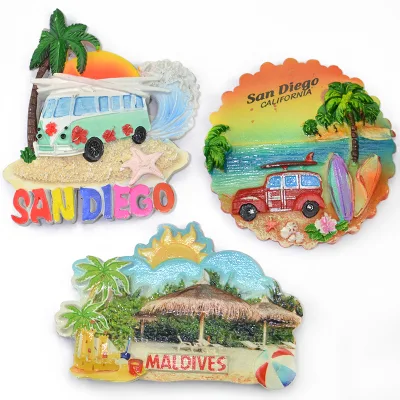
The global market for promotional merchandise continues to evolve, with customized poly resin fridge magnets emerging as a versatile and high-impact category for branding and souvenir initiatives. Unlike flat printed magnets, resin variants offer a three-dimensional quality that allows for intricate detailing, making them particularly effective for tourism souvenirs, corporate events, and commemorative gifts. Sourcing these items requires a disciplined approach that balances aesthetic customization with rigorous quality control and supply chain reliability. This guide provides a comprehensive framework for buyers to navigate the procurement process, focusing on technical specifications, compliance verification, and supplier evaluation based on observed market data and industry standards.
Technical Specifications and Material Composition
Understanding the material properties and dimensional constraints of poly resin magnets is the first step in defining a successful product specification. The core material, poly resin, is distinct from standard ceramic or metal magnets due to its ability to be molded into complex shapes. Observed product data indicates that these items are frequently categorized as "Non-Disposable," suggesting a durability that exceeds that of single-use promotional paper goods. The shape of the magnet is a critical variable; while the market offers standard round and rectangular forms, the defining characteristic of resin magnets is their capacity for custom 3D designs.
Buyers must verify the thickness specifications during the design phase. Available data points to a thickness range of 3-8mm, which can be customized based on the desired visual weight and structural integrity. Thinner magnets may be prone to cracking during shipping or handling, while excessively thick magnets may require stronger adhesive backing to remain functional on metallic surfaces. The surface finish is another technical consideration. The "Painted" technique is commonly observed, often utilizing Pantone color matching to ensure brand consistency. This process involves applying multiple layers of paint to achieve depth and vibrancy, which is essential for the "Multicolor" aesthetic often requested in cartoon or modern styles.
Furthermore, the production standard is typically "as Per Customer's Request," meaning there is no single universal industry standard for resin magnet dimensions or weight. Buyers should explicitly define the single package size and gross weight in their purchase orders to avoid logistical surprises. For instance, a standard single package size might be 10x10x10 cm, but custom orders will vary. The printing method, such as thermal transfer printing, may also be specified for certain metal components or labels associated with the resin item, though the primary resin body is usually painted or sublimated.
Compliance, Certification, and Safety Verification
When sourcing products intended for international distribution, particularly those used as souvenirs or gifts, compliance with safety and environmental regulations is paramount. While the observed product attributes list "Eco-Friendly" as a feature, buyers must not assume this status without verification. The term "Eco-Friendly" is a marketing claim that requires substantiation through third-party testing or specific material certifications. Buyers should request documentation confirming that the resin material does not contain hazardous substances such as lead, phthalates, or heavy metals, which are strictly regulated in markets like the European Union and North America.
In the absence of specific certification data in the provided context, procurement teams must verify compliance with relevant standards such as EN71 (safety of toys) if the magnets are marketed toward children, or REACH regulations for chemical safety. The "Customized" nature of the product means that the chemical composition of the resin and the paints used can vary between suppliers. Therefore, a blanket statement of compliance is insufficient; each production batch should ideally be accompanied by a test report from an accredited laboratory.
Additionally, the "Place of Origin" is a critical factor in determining regulatory requirements. Products originating from Guangdong, China, are subject to specific export controls and quality inspection protocols. Buyers should ensure that the supplier has a history of exporting to their target region and can provide the necessary customs documentation. The "Standard" of production is noted as "According to customer's request," which implies that the supplier may not adhere to a specific ISO standard unless explicitly contracted. Consequently, the buyer must define the quality acceptance criteria in the contract, potentially referencing ISO 9001 for the supplier's quality management system as a baseline requirement.
Cost Drivers and Pricing Dynamics
The pricing structure for customized poly resin fridge magnets is influenced by several dynamic factors, primarily driven by the level of customization and order volume. The observed price range in the market spans from $0.10 to $5.00 USD, a wide variance that reflects differences in complexity, material quality, and finishing techniques. A magnet with a simple, flat design will naturally fall toward the lower end of this spectrum, whereas a complex 3D design with multi-color painting and custom packaging will command a higher price.
Minimum Order Quantity (MOQ) is a significant cost driver. Data indicates an MOQ range from 1 to 3,000 pieces, with specific models showing MOQs as high as 2,880 or 500 pieces. Ordering below the supplier's MOQ often results in a per-unit price increase or a setup fee. Conversely, larger orders can leverage economies of scale, reducing the unit cost. The "prod_packing" specifications, such as 12PCS/240PCS/480PCS, also impact logistics costs. Efficient packing configurations that maximize container space can reduce shipping expenses, which is a crucial component of the total landed cost.
Payment terms, such as T/T (Telegraphic Transfer) or L/C (Letter of Credit), also influence the financial risk and cash flow for the buyer. Suppliers may offer discounts for upfront payments or longer lead times for L/C transactions. Buyers should analyze the total cost of ownership, including the cost of the magnet, packaging, shipping, and potential duties, rather than focusing solely on the unit price. The "Selling Units" being listed as "Single item" suggests that some suppliers may offer samples or small batches at a premium, which is a common practice for prototyping before committing to large-scale production.
Typical Applications and Market Use Cases
Customized poly resin fridge magnets serve a diverse array of applications, ranging from commercial advertising to personal commemoration. The "Usage" attributes highlight "Decoration," "Souvenir Gift," and "Tourism Souvenir" as primary functions. In the tourism sector, these magnets are often designed to represent specific cities or landmarks, utilizing "3D design" capabilities to create iconic representations that are more durable and visually appealing than flat alternatives. The "Item" description "City 3D Resin Fridge Magnets" underscores this specific use case.
Beyond tourism, these magnets are widely used in corporate and promotional contexts. The "Application" list includes "Festival, Event, Promotional," "Tradeshow Gifts," and "Alumni Relations." In these scenarios, the "Logo" is often customized as per the client's request, serving as a lasting reminder of the brand or event. The "Style" of the magnet, whether "Cartoon" or "Modern," is tailored to the target demographic. For example, a cartoon style may be preferred for children's events or family reunions, while a modern, sleek design suits corporate gifts or professional conferences.
The versatility of the product extends to various occasions such as "Back to School," "Graduation," and "Thank You" gifts. The "Feature" of being "Eco-Friendly" can be a significant selling point for organizations aiming to align with sustainability goals. Buyers should consider the end-user's environment; magnets intended for outdoor use or high-traffic areas may require enhanced UV resistance and adhesive strength to prevent fading or detachment.
Supplier Evaluation and Selection Criteria
Selecting the right supplier is critical to ensuring product quality and timely delivery. Based on the observed data, suppliers are located in Guangdong, China, a major manufacturing hub known for its expertise in resin and promotional products. However, geographic proximity to the manufacturing base does not guarantee quality. Buyers should evaluate suppliers based on their ability to meet the "Customized" requirements and their adherence to the "prod_standard" of "as Per Customer's Request."
Key evaluation metrics include the supplier's experience with "3D design" and "Painted" techniques. A supplier with a portfolio of similar projects, such as "Resin Fridge Magnets" or "Metal Fridge Magnet Customised 3D Sublimation Souvenirs," is more likely to deliver high-quality results. The "Brand Name" of the supplier, such as "artigifts," can be a factor in establishing trust, but buyers should verify the brand's reputation through independent reviews or client references.
Communication and responsiveness are also vital. Since the production standard is highly customized, clear and frequent communication is necessary to ensure that the final product matches the design intent. Buyers should assess the supplier's ability to provide samples and their willingness to make adjustments based on feedback. The "FOB Port" options, including Zhongshan, Guangzhou, and Shenzhen, indicate the supplier's logistical capabilities and familiarity with international shipping routes.
Quality Control and Inspection Protocols
Implementing a robust quality control (QC) protocol is essential to mitigate the risks associated with custom manufacturing. Given the "Non-Disposable" nature of the product, any defects in the resin molding, painting, or adhesive application can lead to significant customer dissatisfaction and returns. Buyers should establish clear acceptance criteria for visual defects, such as air bubbles, uneven paint application, or color mismatches.
The "Thickness" of 3-8mm should be verified using calipers on a random sample of the production batch. Additionally, the "Single gross weight" of 1.000 kg per package should be checked to ensure consistency, as weight variations can indicate issues with the resin density or filling. The "Feature" of being "Eco-Friendly" should be validated through material safety data sheets (MSDS) and test reports.
Third-party inspection services are highly recommended for large orders. Inspectors should verify the "prod_packing" configuration to ensure that the correct number of units (e.g., 12PCS, 240PCS) are included in each carton. They should also check the "Logo" accuracy and the overall "Design" fidelity against the approved prototype. For magnets intended for children, a specific check for sharp edges or small detachable parts is necessary to comply with safety standards.
Long-Term Procurement and Supply Chain Considerations
Sourcing customized poly resin fridge magnets is not a one-time transaction but part of a long-term supply chain strategy. Buyers should consider the scalability of the supplier's production capacity. With an observed MOQ range up to 3,000 pieces, suppliers must be able to ramp up production quickly to meet fluctuating demand, especially for seasonal events or large promotional campaigns.
The "Lead Time" is a critical factor that is not explicitly detailed in the provided data but must be negotiated and monitored. Buyers should establish clear timelines for sample approval, production, and shipping to avoid delays. The "Payment" terms, such as T/T or L/C, should be structured to protect the buyer's interests, potentially linking payments to milestones such as sample approval and shipment.
Finally, buyers should plan for the lifecycle of the product. As trends change, the "Style" and "Design" of the magnets may need to evolve. A supplier with strong R&D capabilities can assist in developing new designs and materials, ensuring that the product remains relevant. Building a long-term partnership with a reliable supplier can lead to better pricing, priority production scheduling, and continuous improvement in product quality. By focusing on these strategic elements, buyers can effectively navigate the complexities of the customized poly resin fridge magnet market and secure a supply chain that supports their business objectives.
FAQs
What customization options are available for these magnets?
Customization is available for shape, style, color, and logo. Buyers can request specific dimensions like 3-8mm thickness and choose from round, rectangular, or 3D designs. The standard production follows customer requests rather than fixed industry norms.
Can I order small quantities of resin fridge magnets?
Yes, some suppliers accept minimum orders as low as 100 pieces, while others require 500 or 2,880 pieces. The minimum order quantity varies by model and supplier capacity, so buyers should verify specific requirements before placing an order.
How is the thickness of the resin magnets determined?
The thickness typically ranges from 3 to 8 millimeters and can be customized to suit design needs. Thicker magnets offer better durability but may require stronger adhesive backing to remain functional on metallic surfaces like refrigerators.
What payment terms are commonly accepted for these orders?
Suppliers commonly accept T/T or L/C payment methods for transactions. These terms help manage financial risk and cash flow, with specific conditions often negotiated based on order volume and the buyer's location relative to the FOB ports.
Which shapes are available for custom resin magnets?
Available shapes include round, rectangular, and custom 3D designs tailored to specific requests. The product data shows options for both standard geometric forms and complex city-themed designs that utilize the molding capabilities of poly resin.
What is the typical packaging configuration for these items?
Packaging configurations vary, with options like 12, 240, or 480 pieces per carton depending on the model. Buyers should specify single package sizes, such as 10x10x10 cm, to ensure efficient logistics and accurate weight calculations for shipping.